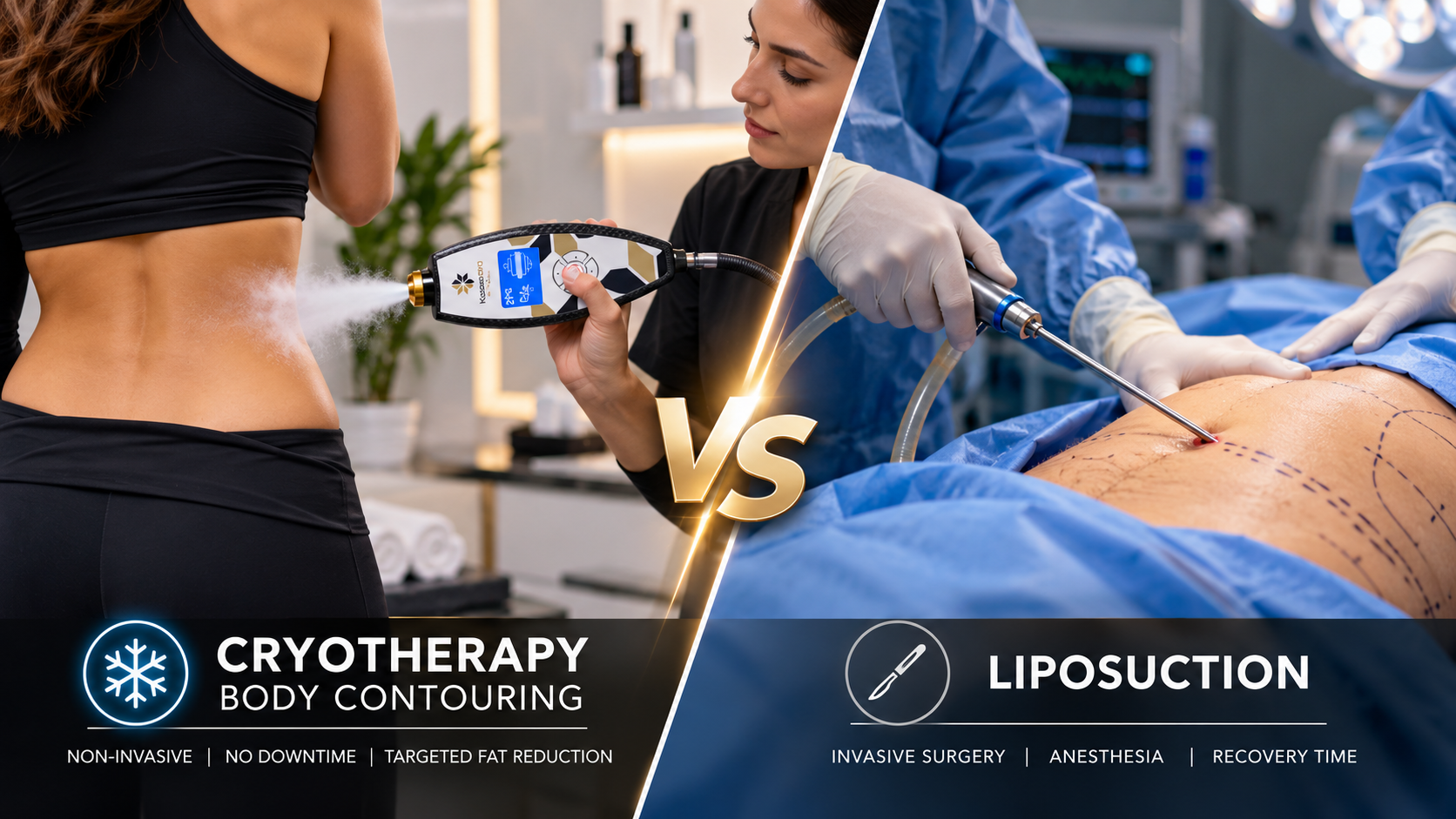
Understanding cryotherapy vs. liposuction starts with your goal. Are you looking for a substantial, surgically planned change in body shape, or would you rather explore a targeted, nonsurgical service with no required recovery period? Cost, realistic results, medical suitability, and your schedule should all influence that decision. This guide explains the differences without suggesting that the two treatments are interchangeable.
What Is the Difference Between Cryotherapy and Liposuction?
Liposuction is surgery. A qualified plastic surgeon makes small incisions and uses a thin tube, called a cannula, to remove fat through suction. It can address selected fat deposits and produce a more substantial contour change than many nonsurgical methods. However, it involves medical assessment, procedural risks, and recovery. The American Society of Plastic Surgeons explains the procedure and the areas surgeons may treat.
Bel0’s localized cryotherapy is non-invasive. Instead of removing fat through an incision, owner/operator Daniel Feinman uses the handheld KaasenPro to apply controlled cold to a chosen treatment area. There are no needles, stitches, operating rooms, or anesthetic drugs involved. This service is intended to support the appearance of a more defined contour, not deliver the same amount of fat removal as surgery.
The practical difference matters. Someone seeking a larger, more predictable surgical change may want to consult a board-certified plastic surgeon. Someone whose first priority is avoiding surgery may prefer to learn about non-invasive body contouring at Bel0 Cryotherapy. Neither choice should be based on dramatic advertisements or a promised number of inches.
How Do Cryotherapy and Liposuction Work?
During liposuction, a surgeon removes a selected amount of subcutaneous fat—the fat beneath the skin—using a suction device. The amount and location depend on your anatomy, safety considerations, and the surgical plan. Skin elasticity also affects how smooth the area may appear after healing. Liposuction is not a substitute for weight loss, and it does not automatically correct loose skin, stretch marks, or cellulite.
Non-invasive technologies take several approaches. Some cool tissue, while others use controlled heat, sound, or other energy. The FDA’s guide to non-invasive body contouring explains that different devices have different purposes, benefits, limitations, and risks. A finding about one technology should not automatically be applied to every service described as cryotherapy.
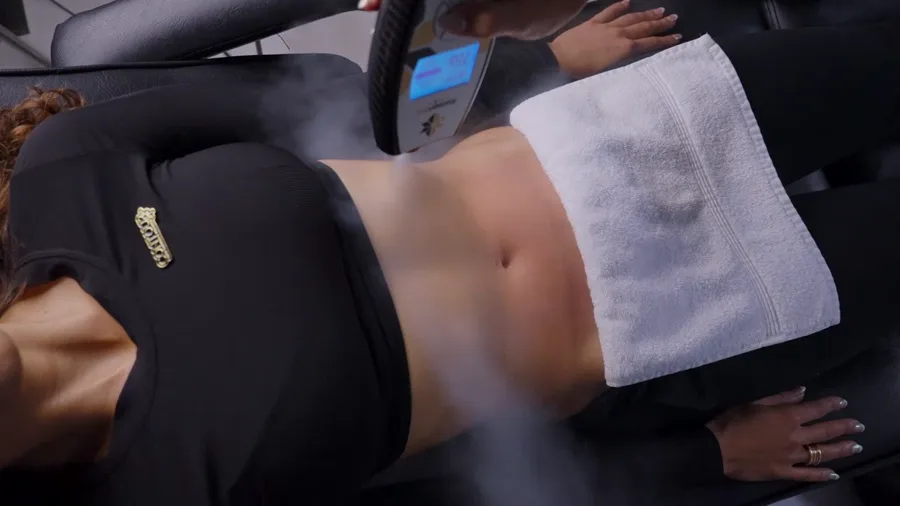
At Bel0, the selected area receives moving passes of cold from the KaasenPro handheld device. A typical application is approximately ten minutes per area, although the full appointment includes preparation and discussion. Clients generally describe the sensation as intense cold or cold pressure. You can explore more background in our body-contouring science article.
How KaasenPro Differs From Vacuum-Based Fat Freezing
Traditional vacuum-based cryolipolysis uses an applicator that draws a fold of tissue into a cup and cools it over a longer treatment cycle. KaasenPro, by contrast, is a handheld, moving cold-air application. These delivery methods are not equivalent. Published results for a particular vacuum-based fat-freezing device cannot be assumed to predict results from a KaasenPro session.
This distinction is especially important when comparing cryotherapy vs. liposuction online. You may see percentages of fat-layer reduction or claims about destroyed fat cells associated with specific clinical devices. Those figures should not be represented as proven results for every cold-based system. The goal at Bel0 is to discuss what your own treatment can reasonably offer, track changes consistently, and avoid guaranteed outcomes.
Results and Treatment Areas: What Can You Expect?
With liposuction, the surgically removed fat is gone from the treated site, but your final shape is not visible immediately. Swelling must settle, and remaining fat cells elsewhere—or in the treated region—can still enlarge with future weight gain. A qualified surgeon can explain what degree of change is feasible and whether another procedure is needed for excess skin.
At Bel0, some clients notice early changes in measurements, bloating, or appearance, while others may not notice a difference until later—or at all. An immediate measurement change is not proof of permanent fat loss. Lighting, posture, hydration, food intake, and tape placement can all affect comparisons. Our body-contouring before-and-after guide explains how to assess photos and measurements realistically.
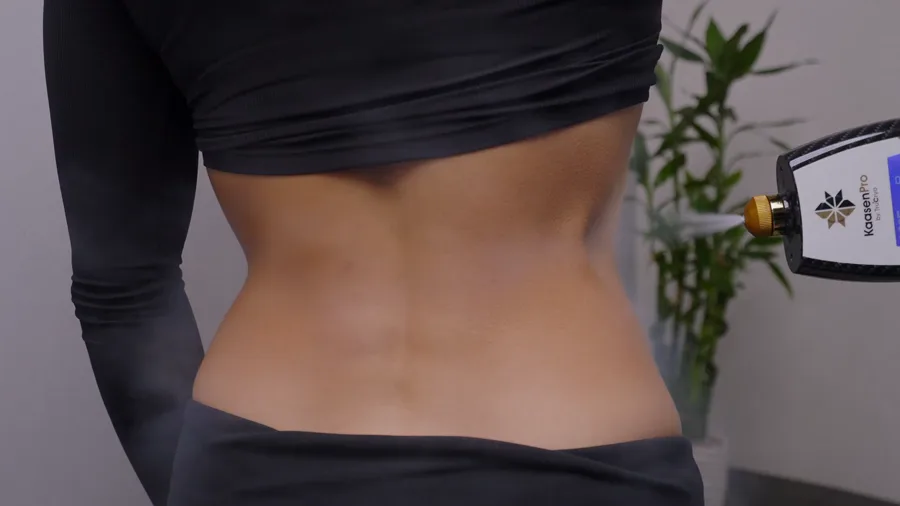
Clients may choose the stomach or lower abdomen, but Bel0 is not limited to belly treatments. Other areas people ask about include flanks and love handles, waistline, upper arms, inner thighs, back, bra line, and smaller areas around the chin or neck. Treatment suitability depends on the location and individual health factors. See our detailed guide to body-contouring treatment areas for more ideas.

Another difference is the number of visits. Liposuction generally involves one surgical procedure for the selected plan, although revisions are sometimes necessary. At Bel0, people may start with one appointment and then decide whether a series makes sense. Read how many body-contouring sessions you may need and our explanation of what one session can and cannot show. No package should be sold as a guaranteed equivalent to surgical fat removal.
Neither procedure targets deep visceral fat surrounding internal organs. Both should be viewed as appearance-focused approaches rather than obesity treatments or replacements for nutrition, movement, or medical advice. Cellulite and loose skin are separate concerns that may need different expectations or treatment options.
Recovery, Risks, and Who Should Avoid Treatment
Recovery is often the deciding issue in a cryotherapy vs. liposuction comparison. After liposuction, patients may need compression garments, activity restrictions, pain management, and time away from normal routines. According to the ASPS liposuction recovery timeline, bruising, swelling, and limits on exercise can extend over several weeks. Recovery differs according to the patient and extent of surgery.
Surgical risks can include infection, bleeding-related complications, anesthesia problems, contour irregularities, changes in sensation, fluid accumulation, and blood clots. These issues should be discussed directly with a qualified surgeon. The ASPS safety information lists additional complications and questions to review before proceeding.
Bel0’s localized treatment does not have surgical downtime, and most clients can resume normal activities. That does not mean cold exposure is completely risk-free. Temporary redness, sensitivity, discomfort, or other skin reactions may occur. Serious cold-related complications are possible with some cold-based body-contouring technologies, and their risk profiles differ. Review our article about cryo slimming and sensitive skin before scheduling if you have concerns.
Anyone with Raynaud’s disease, cold urticaria, certain circulation disorders, or a history of problematic responses to cold needs particular caution. Pregnancy, active cancer, open wounds, recent procedures, or significant medical concerns also warrant screening and appropriate medical guidance. Tell Daniel about relevant medications and diagnoses before booking; do not change prescribed medications to qualify for treatment. If you are considering surgery, the ASPS candidate guidelines can help you prepare questions for your surgeon.
What Do Cryotherapy and Liposuction Cost in New Jersey?
Price is important, but compare the full cost of achieving your goal rather than a single advertised number. The American Society of Plastic Surgeons lists an average liposuction surgeon’s fee of $4,711. That is a national figure, not a guaranteed New Jersey quote, and it excludes anesthesia, operating-room expenses, and other possible charges. A surgeon must provide an individualized estimate after assessing your treatment plan.
Bel0 Cryotherapy publishes pricing so you can evaluate nonsurgical options before committing. Current examples include a $249 first-time client package for two single-area sessions, a three-session single-area package at $597, and a five-session single-area package at $897. There are also longer series and two-area packages. Visit the official Bel0 Cryotherapy pricing page to confirm current amounts and terms before purchasing.
Think about your goals and the total proposed number of visits. A lower upfront expense is not automatically better value if it cannot provide the degree of change you want. Conversely, paying for surgery may be unnecessary if you are not looking for a major alteration or do not wish to accept surgical risks. Our article on affordable body-contouring options offers a broader comparison.
Neither the national liposuction figure nor a Bel0 package price is a prediction of results. Ask what is included, how many appointments are likely, what happens if your goals are not reached, and what costs could arise afterward. Transparent expectations matter more than a dramatic discount.
Which Option Is Right for You in East Hanover, NJ?
Liposuction may deserve consideration if you want a surgically assessed, more substantial change in selected fat deposits, are an appropriate surgical candidate, understand the expense, and can accommodate recovery. A board-certified plastic surgeon is the right person to evaluate those questions and explain the likely outcome for your anatomy.
Bel0 Cryotherapy may be worth exploring if your preference is a non-invasive, targeted appointment without incisions or anesthetic drugs and you understand that results may be modest, variable, or absent. If you want to start with a specific area—arms, thighs, stomach, flanks, or back—we can discuss the appropriate service and reasonable expectations. You can also read more about nonsurgical belly contouring in New Jersey as one example of a localized approach.
Bel0 Cryotherapy is located inside My Salon Suite at 346 Route 10, Suite 401, East Hanover, NJ 07936, next to Verizon on Route 10. Buzz Suite 401 when you arrive. All appointments are performed by owner/operator Daniel Feinman, and visits are by appointment only. Clients visit from Livingston, Florham Park, Parsippany, Morristown, Madison, Chatham, Roseland, West Orange, and nearby towns.
Have questions before making a decision? Check the Bel0 contact page, or call or text 973-558-2050. To see available appointments, book your body-contouring visit online. You can discuss your selected area with Daniel before deciding whether a single appointment or a series is appropriate.
The bottom line: In a comparison of cryotherapy vs. liposuction, neither option wins for everyone. Surgery can remove selected fat deposits but requires medical assessment, carries meaningful risks, and involves recovery. Bel0 offers a convenient, nonsurgical way to explore localized contouring without promising surgical-level results. Choose based on your health, goals, budget, and comfort with the process—not on exaggerated before-and-after claims.
Educational information only. This article does not diagnose conditions or replace advice from a qualified healthcare professional. Individual results and suitability vary.